

How emotional health quietly shapes nearly every system in your body, and what science now tells us about healing both at once.
There is a conversation happening inside you right now — one you cannot hear. Your brain is dispatching chemical messengers to your heart, your gut, your immune cells. Your body, in turn, is sending signals back upward. This two-way dialogue between emotional experience and physical health is one of the most consequential — and most underappreciated — relationships in medicine.
For most of Western medical history, the mind and body were treated as separate domains. Psychiatrists handled the inner life; physicians handled the flesh. That partition is now dissolving. Decades of research in psychoneuroimmunology, cardiology, and endocrinology have revealed something both humbling and hopeful: what you feel shapes what your body does, often profoundly.
75% of doctor visits have a stress-related component
2× higher heart disease risk linked to chronic depression
10+ years of life expectancy tied to strong social connection
Stress, the Body's First Responder
When you perceive a threat, whether it's a car swerving toward you or a message from your boss arriving at 11 p.m., your hypothalamus triggers a cascade. Adrenaline floods in, your heart rate climbs, digestion pauses, immune function recalibrates. In short bursts, this stress response is lifesaving. Stretched over months or years, it becomes corrosive.
Chronic psychological stress keeps cortisol elevated, which over time damages the hippocampus, promotes systemic inflammation, suppresses immune surveillance, and accelerates cellular aging. Telomeres, the protective caps on chromosomes, shorten measurably faster in people with high chronic stress. Biologically, worry can age you.
"The immune system does not distinguish between a tiger and a toxic workplace. It responds to what the nervous system tells it."
Inflammation is the central mechanism here. Emotional distress activates the same inflammatory pathways that the body uses to fight infection. When that activation becomes chronic, it becomes a substrate for disease — cardiovascular, metabolic, autoimmune, even neurological.

The gut: a second brain that listens
Your gastrointestinal tract contains roughly 500 million neurons and produces about 90% of the body's serotonin. The gut and brain communicate constantly via the vagus nerve — and the traffic runs in both directions. Anxiety can trigger nausea, urgency, or cramping. But a disrupted gut microbiome can also influence mood, anxiety, and cognitive clarity through the same highway.
This bidirectionality is reshaping how clinicians think about conditions like irritable bowel syndrome, which affects about 15% of the global population. Many patients cycle between gastroenterologists and therapists, each treating half a problem. The more useful frame is a single loop: mind and gut co-regulating each other, and in many patients, co-dysregulating together.
The heart hears what you feel
Cardiologists have long known that depression is a stronger predictor of a second heart attack than cholesterol levels. Loneliness raises blood pressure. Grief can precipitate a condition called Takotsubo syndrome, sometimes called "broken heart syndrome", in which intense emotional distress causes the left ventricle to balloon suddenly, mimicking a heart attack in every measurable way.
The mechanisms include autonomic nervous system dysregulation (raising resting heart rate and reducing heart rate variability), elevated cortisol (which promotes arterial plaque), and behavioral pathways — depression reduces the likelihood that patients will exercise, eat well, or adhere to medication. The emotional and biological pathways reinforce each other.
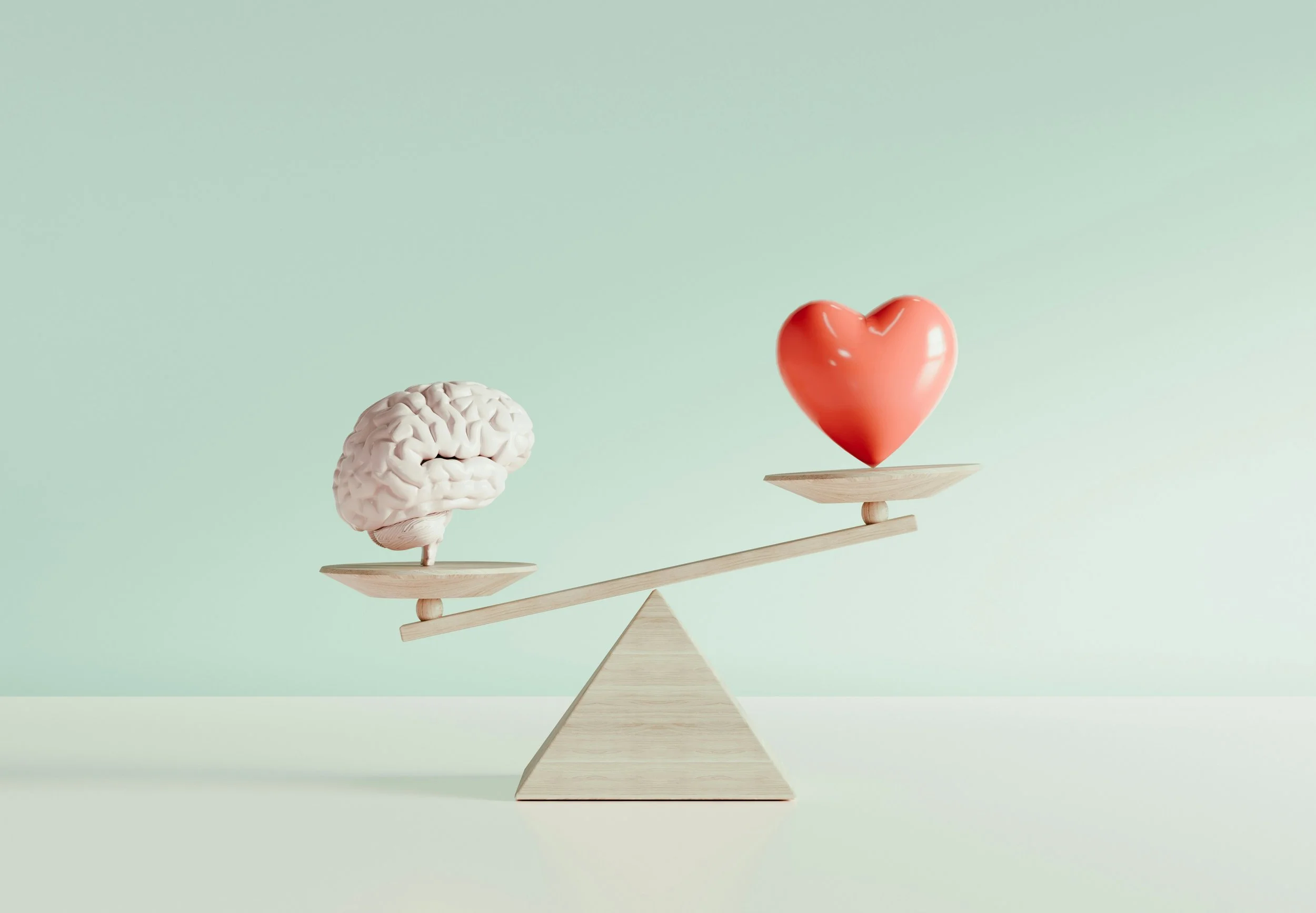
Healing the loop, not just one end of it
Understanding the connection matters most for what it implies about treatment. Addressing only physical symptoms while emotional distress continues is, in many cases, incomplete medicine. Equally, addressing mental health while ignoring chronic pain, sleep deprivation, or poor nutrition is working with one hand tied.
Several practices now have robust evidence on both sides of the equation. Regular aerobic exercise reduces symptoms of depression and anxiety at rates comparable to antidepressants — and reduces cardiovascular risk simultaneously. Quality sleep consolidates emotional memory, regulates cortisol, and repairs tissue. Mindfulness-based stress reduction produces measurable changes in inflammatory markers and brain structure. Strong social relationships reduce all-cause mortality by roughly 50% compared to social isolation — an effect size comparable to quitting smoking.
What the science suggests isn't that illness is "all in your head." It's that the head is fully in the body — and the body, in the head.
None of this collapses into a simplistic "think positive" injunction. Serious physical illness can cause serious emotional suffering. Serious emotional illness can disable the body. The relationship is real and reciprocal — not a matter of willpower. But it does mean that the most durable path to physical health often runs through emotional honesty, social connection, rest, and meaning — not just medication and procedure.
The conversation between your brain and your body is already happening. The question is what kind of conversation you can help it become.

More than mood: building a life that supports emotional health
Beyond exercise and sleep, a richer toolkit — practices drawn from psychology, neuroscience, and centuries of human wisdom.
Emotional health is not the absence of difficult feelings. It is the capacity to experience the full range of human emotion without being overwhelmed by it — to feel grief without drowning in it, anger without acting destructively on it, joy without anxious clinging to it. That capacity can be built, deliberately, over time.
Most emotional suffering is amplified by a gap between what we actually feel and what we believe we feel. Developing emotional literacy, the ability to name emotions with precision, is one of the highest-leverage interventions available. Research by psychologist Lisa Feldman Barrett suggests that people who can distinguish between, say, disappointment and shame, or anxiety and excitement, recover from distress significantly faster than those who operate with coarser emotional vocabulary.
Journaling
Expressive writing for 15–20 min, 3–4 times per week has been shown to reduce intrusive thoughts and improve immune function. The act of narrative-making, turning raw experience into story, reorganizes emotional memory.

Meditation
Even brief daily practice (8–10 min) increases gray matter density in regions governing emotional regulation. The goal isn't calm — it's observing thoughts without merging with them.
Therapy
CBT, ACT, and somatic approaches each target different layers — cognition, values-based behavior, and body-held tension. Therapy is not a last resort; it is skilled training in your own inner life.
Relationships: the single strongest predictor
Harvard's 85-year Study of Adult Development — the longest longitudinal study of human flourishing ever conducted — found that the quality of close relationships was a more reliable predictor of late-life happiness and health than cholesterol levels, wealth, or fame. Not quantity. Quality: the felt sense that there is someone in your life you could call at 2 a.m.

Repair, not perfection
Relationship researcher John Gottman found it's not the absence of conflict but the ability to repair after ruptures that predicts lasting bonds. Learning to apologize clearly and receive apologies graciously is a skill, not a trait.
Boundaries as care
Clear limits are not walls — they're the structure that makes genuine closeness possible. Resentment is often the signal that a boundary is overdue. Naming a need is almost always less costly than the slow erosion of unexpressed frustration.
"Loneliness is not the absence of people. It is the absence of feeling known."
Investing in relationships requires deliberate effort in a culture that rewards productivity over presence. Scheduling regular time with people you love — and protecting that time with the same seriousness you'd protect a work deadline — is not sentimentality. It is health maintenance.
Meaning and purpose
Viktor Frankl, writing from within Auschwitz, observed that those who retained a sense of meaning endured conditions that destroyed others psychologically. Decades of subsequent research have borne this out: a sense of purpose is independently associated with reduced risk of dementia, lower all-cause mortality, and significantly better recovery from depression.
Purpose doesn't require a dramatic calling. It can be as modest and real as the commitment to show up for your children, tend a garden, or make your corner of a workplace slightly more humane. What matters is the thread connecting daily action to something that feels worth doing — and revisiting that thread when it frays, as it inevitably will.
Values clarification
Periodically ask: what would I regret not having done, or been? Deathbed studies consistently surface the same answers — not career achievements, but depth of connection and authenticity of choices.
Contribution
Volunteering, mentoring, or acts of service activate reward circuitry and buffer against depression. Giving attention to others temporarily dissolves the self-focused rumination that underlies much anxiety.
Your environment
Emotions are not generated entirely from within — they are co-produced by what surrounds you. The research on environmental influences on mental health is now extensive enough to treat as clinical guidance, not lifestyle advice.

Nature exposure
Spending 120 minutes per week in natural settings (in any single or multiple doses) is associated with significantly better self-reported wellbeing. Even hospital patients with window views of trees recover faster and use less pain medication.
Reducing digital friction
Social media use above two hours daily is consistently linked to increased anxiety and depressive symptoms, particularly in young adults. The mechanism isn't the platform — it's the combination of passive consumption, social comparison, and interrupted attention.
Physical space
Clutter elevates cortisol. Natural light stabilizes circadian rhythms and mood. The spaces you inhabit daily shape your nervous system in ways that are measurable but easy to underestimate.
Creativity and play
Adults tend to regard creativity as a professional category — something artists do — rather than a psychological need. But the neuroscience of play suggests something different: creative activity activates the default mode network, a brain state associated with self-referential processing, integration of disparate memories, and identity consolidation. In simpler terms, making things helps you understand who you are.
It doesn't matter what you make or how well you make it. The value is in the process of absorbed, non-outcome-driven engagement — what Mihaly Csikszentmihalyi called flow. Flow states consistently reduce anxiety, suppress self-critical thought, and leave people feeling more alive than they did before.

NIS and Emotional Well-Being
NIS helps optimize neurological function. Emotions are generated in the nervous system. Dr. Phillips, the founder and developer if NIS, asserts that every physical problem has an emotional component. My clinical experience over 41 years of treating patients confirms this. Conversely, I’ve observed that patients under emotional stress don’t respond as well with physical issues. Physical and emotional health are intertwined at a deep level, so NIS is critical to maintaining balance in the nervous system.
Emotional health is a practice, not a destination. The goal is not a permanent state of wellbeing — it is a growing capacity to return to balance.